

EDITORIAL REFLECTIONS
EVERYBODY IS ON STAGE NOW: SÉLAVY IN CONVERSATION WITH KURT TUCHOLSKY AND CARL VON OSSIETZKY
June 2, 2026
Eight months ago, Madame Sélavy shared a table outside of time with Karl Kraus, speaking of embers, authorship, and the slow exhaustion of language. Now two new apparitions emerge from the wreckage of history: Kurt Tucholsky and Carl von Ossietzky. Together they speak with Madame Sélavy about democracy after attention collapse, journalism in the age of permanent performance, the disappearance of the audience, and what remains of public life once everybody is on stage.
This time there is no café. No smoke beneath chandeliers, no waiters carrying coffee and arguments between marble tables. Instead, it begins nearly at closing time inside the Berlin State Library: glass, steel, silence, controlled temperature. Outside, the city flickers with screens and passing headlights. Inside, history has been flattened into archival boxes and bound volumes.
Madame Sélavy sits alone in the fluorescent calm of the reading room. Before her lie bound volumes of Die Weltbühne, summoned from underground storage by a librarian young enough never to have held a newspaper with urgency.
Then the room shifts slightly. Not dramatically. More acoustically. The kind of change one notices first in the air rather than with the eyes.
Across from Madame Sélavy now sit Tucholsky and Ossietzky, less like ghosts than like men interrupted in the middle of an argument. Tucholsky carries the impatience of someone perpetually disappointed by public stupidity. Ossietzky appears quieter, severe in his attentiveness, as though still listening for structural cracks no one else notices yet.
This is another meeting across a century, though a different century than before. If Kraus belonged to Vienna and the collapse of language, Tucholsky and Ossietzky belonged to Berlin and the collapse of democratic confidence. Through Die Weltbühne they fought militarism, nationalism, authoritarianism, media corruption, and political complacency during the unstable years of the Weimar Republic. The magazine believed that journalism carried civic responsibility. Words were meant to intervene before catastrophe arrived.
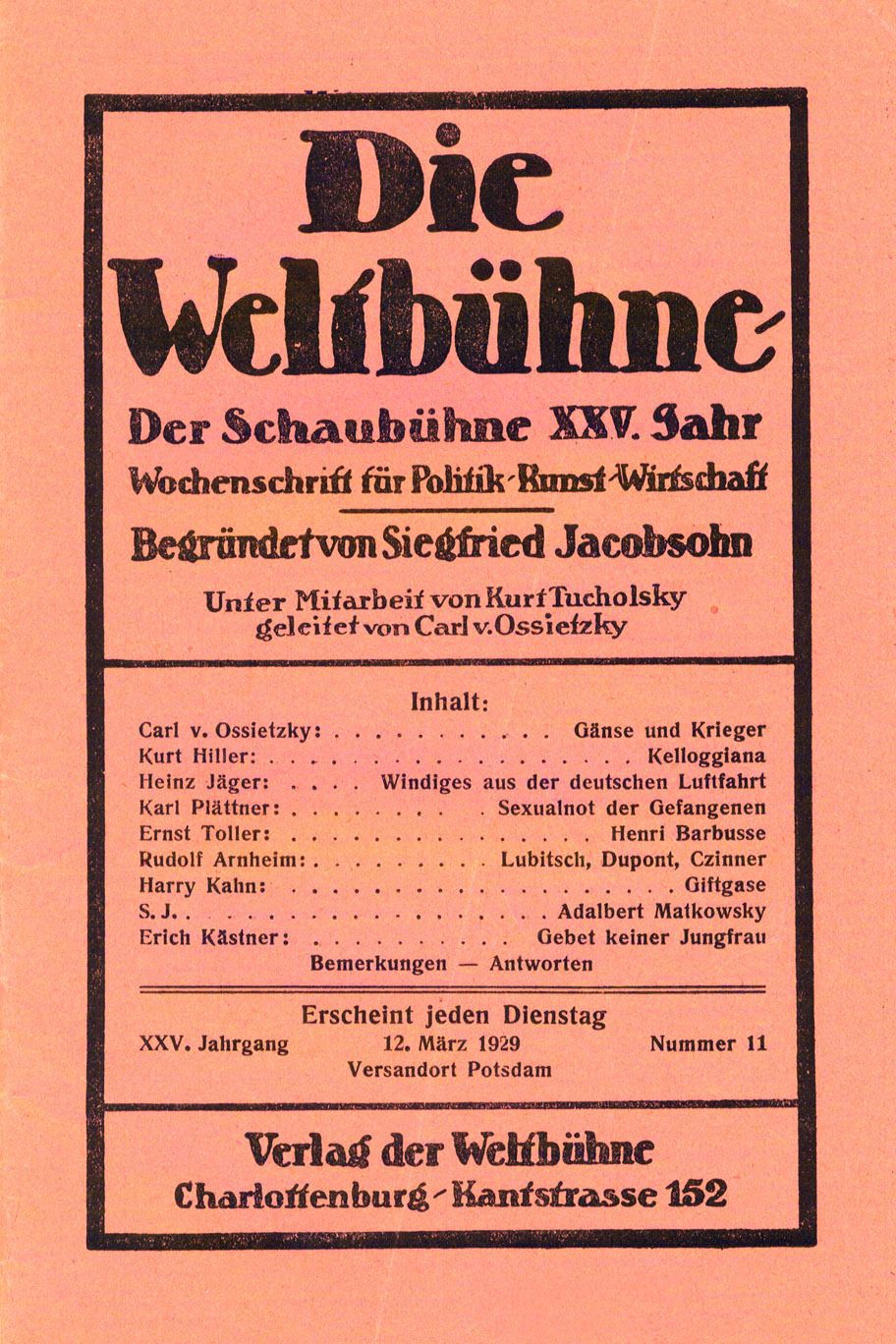
Before feeds and followers, there were editors and deadlines.
The question before us is therefore no longer simply about language or political decay. It is something stranger:
What becomes of the public sphere once everybody is on stage?
THE READING ROOM BEFORE CLOSING
“You people preserve everything now,” says a voice. “Even the mistakes.”
Across from Madame Sélavy sits Tucholsky, cigarette already in hand despite the prohibition signs visible throughout the reading room. Next to him, adjusting his glasses as though slightly embarrassed by the arrangement, sits Ossietzky.
Madame Sélavy closes the volume slowly.
“I expected ghosts,” she says. “You look more like disappointed editors.”
“That is what ghosts become in Germany,” Tucholsky replies.
For a while, they watch students working silently at nearby terminals. Large screens illuminate exhausted faces. Headphones everywhere. A few dozen people connect to invisible worlds while sitting beside one another without speaking.
EVERYONE BECAME THEIR OWN NEWSPAPER
“You imagined the masses reading newspapers,” Madame Sélavy says eventually. “Instead, everyone became their own newspaper.”
Tucholsky laughs sharply.
“No. Newspapers at least employed editors.”
Ossietzky continues looking across the room. “What happened to public life?” he asks quietly.
Madame Sélavy considers the question carefully. “It fragmented,” she says. “Then it accelerated. Then it became psychological.”
“That sounds unhealthy,” says Tucholsky.
“It is difficult to explain. People are permanently visible now. Politics became identity. Identity became morality. Morality became spectacle.”
“And journalism?”
She hesitates. “Journalism still exists. But attention collapsed. Information became endless.”
Tucholsky leans back. “We feared propaganda,” he said. “But you drowned in excess.”
For a moment, none of them speaks.
Then Madame Sélavy runs her fingers lightly over one of the old issues.
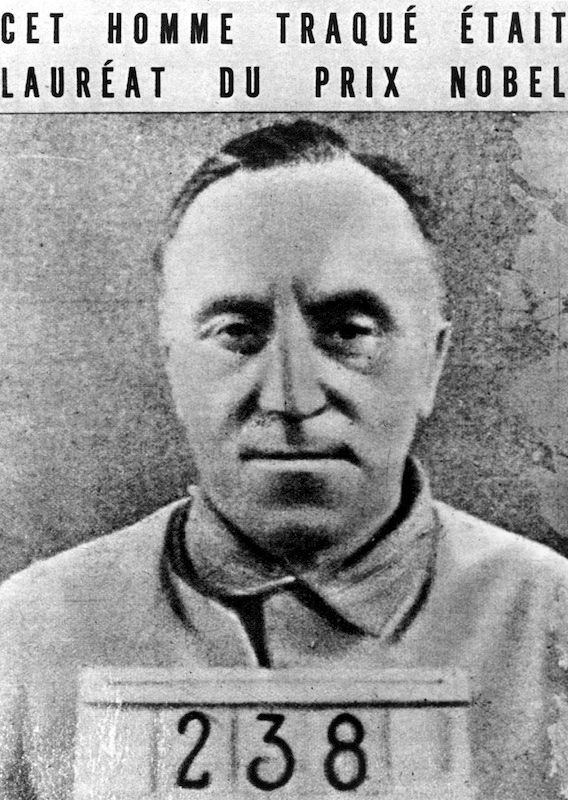
The Nobel laureate who discovered that truth rarely comes with immunity.
THE MEN WHO SPOKE FOR EUROPE
“There is something else,” she says. “Reading all this now, one notices how male your world was.”
Tucholsky smiles automatically, prepared perhaps for flirtation or irony, but her expression remains neutral.
“The cafés. The newspapers. The arguments about civilization. Entire worlds of men speaking to other men about the fate of Europe, and the world.”
Ossietzky lowers his eyes first.
Tucholsky exhales smoke slowly. “Well,” he says carefully, “newspapers were ugly places.”
“That is not an answer.”
“No,” he admits. “Probably not.”
The silence that follows feels heavier than the earlier ones.
“We believed ourselves progressive,” Ossietzky says after a while. “And in many ways we were. But public life itself remained narrow. We mistook access for universality.”
Madame Sélavy nods. “The wandering intellectual,” she says. “The solitary observer. The man free to spend entire afternoons in cafés thinking about collapse while someone else organizes ordinary life around him.”
Tucholsky looks genuinely wounded now, though whether by the criticism or by recognition itself is unclear. “You speak as though we designed the century personally.”
“No,” she replies softly. “But intellectual life always carries invisible architecture. Who gets time. Who gets authority. Who gets solitude.”
Outside, rain has begun again.
At another table nearby, a young woman is photographing pages from an archive box with her phone at extraordinary speed.
Tucholsky watches her for a moment. “And now?” he asks. “Did your century solve this?”
Madame Sélavy laughs quietly. “No. It merely changed the performance.”
Even Ossietzky smiles at that.
“The old masculine intellectual,” she continues, “became suspicious in some circles. Too detached. Too universal. Too convinced his private experience represented history itself.”
“And yet here you are,” Tucholsky observes, gesturing toward the journals.
“Yes,” she says. “Because despite everything, one still misses the seriousness.”
Ossietzky touches one of the bound volumes almost tenderly. “We believed democracy was fragile because of censorship,” he says quietly. “But fragility can also come from exhaustion.”
No one answers immediately.
Beyond the glass walls of the library, Berlin shimmers electronically in the rain.

Satire, pipe included.
ON EXHAUSTION
“You still believed in intervention,” Madame Sélavy says. “That words could enter public life and alter its direction.”
Tucholsky smiles faintly. “Of course we did. Otherwise, why publish?”
“And now?” asks Ossietzky.
Madame Sélavy looks around the reading room. “Now everything publishes itself.”
Tucholsky grimaces. “That sounds intolerable.”
“It mostly is.”
At a nearby table, a student is scrolling through six windows simultaneously: news, messages, photographs, financial charts, a dating app, and an unfinished essay. The screen light flickers across his face like weather.
“In your era,” Madame Sélavy continues, “public life still had architecture. Newspapers, journals, salons, parties, unions, publishers. People argued within a shared reality, even when they hated each other.”
“And you no longer do?” Ossietzky asks.
“We share infrastructure,” she says. “Not reality.”
Tucholsky leans back in his chair again. “You speak as if civilization became psychological.”
“It did.”
He laughs once, dryly. “We at least had the decency to collapse politically.”
Madame Sélavy smiles. “You collapsed visibly. We dissolve continuously.”
For a moment the three of them watch the students silently working beneath the library’s enormous modern ceiling.
“We believed that journalism could defend democracy,” Ossietzky says quietly.
“And can it?” she asks.
He does not answer immediately.
Finally: “Only if people still believe a common world exists.”
That sentence lingers heavily between them.
Madame Sélavy opens another volume carefully. The pages carry that particular archival smell of preserved paper and dust.
“You know,” she says, “Sélavy does not really believe in manifestos anymore.”
Tucholsky looks offended. “That is because your century became frightened of conviction.”
“No,” she replies calmly. “It became exhausted by declarations.”
The old satirist narrows his eyes. “You think ambiguity is moral now?”
“No. Necessary.”
He is about to interrupt, but she continues. “Wait! You fought against censorship, militarism, authoritarianism, corruption. You believed that language could expose lies. But we inherited something stranger: endless visibility. Endless commentary. Endless opinion. Every catastrophe immediately transformed into content.”
“And your answer is drifting essays about architecture and cinema?”
The question carries mockery, but also genuine curiosity.
“Our answer,” Madame Sélavy says, “is attention.”
That seems to irritate him even more. “Attention?”
“Yes. The capacity to remain with things long enough for them to acquire meaning.”
Tucholsky lights another cigarette despite the sensors clearly visible in the ceiling. “In my time,” he says, “writers wanted to awaken people.”
“In ours,” Madame Sélavy replies, “people can no longer stop awakening. The nervous system never sleeps.”
Even Ossietzky seems unsettled by this. “You speak often about exhaustion,” he observes.
“Because exhaustion is political now,” she answers. “Not only economic exhaustion. Cognitive exhaustion. Moral exhaustion. Historical exhaustion.”
Tucholsky exhales smoke toward the ceiling smoke detectors.

When even irony demanded regime change.
A SLOWER MIND
“And the magazine. What else does it want?”
Madame Sélavy considers the question for a long moment. Then: “Continuity, perhaps.”
“Continuity of what?”
“Certain forms of consciousness.”
The old writers remain silent.
“Sélavy knows the twentieth century happened,” she continues. “It knows Europe failed itself repeatedly. It knows intellectual life excluded people, romanticized itself, mistook style for truth. It does not want restoration.”
“And yet,” says Ossietzky quietly, “you keep returning to us.”
“Yes,” she admits. “Your world still believed that thought mattered publicly.”
Outside, rain strikes the library glass in soft diagonal lines.
“In our world,” she continues, “culture increasingly becomes performance, branding, positioning. Everyone is visible. Very little endures.”
Tucholsky looks around the vast reading room. “And these readers?”
“They are searching.”
“For what?”
She smiles faintly. “A slower mind, maybe.”
The loudspeaker announces the library’s closure in fifteen minutes.

The last place in Berlin where silence still has institutional support.
Tucholsky suddenly laughs again, though this time without bitterness. “You realize,” he says, “that your project sounds almost monastic.”
“Not monastic,” Madame Sélavy replies. “Portable.”
That interests Ossietzky. “What do you mean?”
“The old intellectual world depended on institutions. Newspapers. Universities. Bourgeois reading culture. Cafés. Shared rhythms of attention. Much of that has fragmented.”
“And Sélavy?”
“It moves differently. Between cities. Between disciplines. Between memory and drift. It exists in fragments because contemporary life itself became fragmented.”
Tucholsky looks unconvinced. “You make uncertainty sound elegant.”
“No,” she says quietly. “Only survivable.”
Another silence settles over the room.
Then Madame Sélavy closes the volume before her and looks directly at them. “There is something else your generation still possessed.”
“What?”
“Confidence that history itself could be narrated coherently.”
Neither man answers immediately.
Finally Ossietzky says: “And you lost this?”
“We inherited too much history at once.”
Berlin shimmers electronically in the rain. Notifications cross the city like nervous impulses.
Tucholsky crushes out the cigarette carefully.
“You preserve all this now,” he murmurs, looking toward the archives beneath them. “The journals. The essays. The warnings.”
“Yes.”
“And do people read them?”
Madame Sélavy looks toward the shelves disappearing underground. “Sometimes,” she says. “Usually when they begin suspecting something essential has been lost.”
A librarian moves quietly between the tables, collecting abandoned notes and switching off the green reading lamps one by one. Nobody asks Madame Sélavy to leave. Across from her, the chairs are already empty again. Beyond the glass walls of the library, Berlin continues glowing into the night, everyone still speaking, performing, publishing themselves into the electronic dark. Somewhere beneath the building, the bound volumes of Die Weltbühne return once more to storage, waiting patiently for another century to misunderstand them correctly. The stage remains lit.
Cover image: Two men who still believed journalism might interrupt history.
Comments