
TECHTONICS
PULL, PAUSE, RESPONSE: ON THE LOGIC OF THE REFRESH
EGON PROBST
March 24, 2026
A phone stops functioning, and with it the illusion of continuity. What emerges is not a lack, but a structure: a small, repetitive gesture that has quietly organized attention, closer in its rhythm of anticipation and intermittent reward to gambling than to communication. The author isolates this gesture and follows its implications, showing how something trivial expands into a broader condition, reshaping time, waiting, and the unnoticed rhythms of everyday life.
My phone died somewhere on the train between St. Gallen and Bregenz. There was no warning beyond the brief dimming of the screen and the small, indifferent message—1%—that appears so often it has almost lost its meaning, more a formality than a signal. Then the screen went black and stayed black. I tapped it once or twice, out of habit more than hope, as though the device might reconsider if addressed with sufficient persistence, but the gesture had no effect. The phone had quietly withdrawn from the day, without protest or apology.
For a moment, I held it in my hand, waiting for something further to happen—a flicker, a delayed response, some sign that the interruption was temporary. Nothing came. The surface remained blank, reflective now rather than luminous, returning only a faint image of the carriage around me. What had, seconds earlier, been a continuous stream of messages, headlines, and small confirmations of activity was suddenly reduced to an object again: a smooth, inert rectangle, indistinguishable from any other piece of dark glass.

The system announces its end with the same calm tone it uses to sustain itself.
The transition was abrupt enough to feel slightly implausible, as though a system that had been operating continuously had been switched off without explanation. There was no gradual fading, no easing out of use. One moment the device was present, the next it was not. The absence was registered not as a loss of information but as a small break in continuity, a gap in something that had, until then, been running without interruption.
I slipped the phone into my pocket, not because it was of any use there, but because there was nothing else to be done with it. At first, I did what everyone does in such situations: I treated the problem as technical rather than existential. I checked my bag for a charger I knew I had not brought. All I found was a cable. I tried the outlet under the seat, which existed but did not function. For a moment, I considered asking the man across the aisle whether he had a charger, but the thought of explaining that my phone had died, a confession that now carries a faint undertone of carelessness, seemed unnecessary. So, I looked up.

No one was instructed, yet everyone performs the same movement.
What I saw, once I had nothing else to do, was the train, and everyone on it, on their phones. Not casually, not occasionally, but with the quiet concentration of people engaged in a small private ritual. Heads slightly lowered. Shoulders curved forward. Faces illuminated by the bluish light of their screens. The carriage had the atmosphere of a behavioral experiment lab in which everyone had been given the same object and asked to observe it carefully. What struck me first was the uniformity of the gestures. Every few seconds a thumb moved downward across the glass, and the page refreshed. The same motion repeated across the carriage like a synchronized exercise no one had agreed to perform.
Pull. Pause. Response.

The gesture, reduced to muscle memory.
The motion is small enough to disappear when one participates in it. But watching it without a working phone in my hand felt like being the only sober person at a dinner where everyone else has had too much to drink. Nothing dramatic is happening. No one is behaving badly. But the rhythm of the room has shifted in a way that becomes visible. The sober person notices the pauses between sentences, the unnecessary laughter, the way conversations circle back on themselves. The person with the dead phone notices the refresh gesture. Again and again, people pulled down on their screens as if testing a mechanism. Each time there was a brief suspension, followed by the small appearance of something new: a message, a photograph, a headline, a number beneath a heart-shaped icon. The gesture looked familiar.
Not from the world of communication, but from the world of gambling. More precisely, from something built around the same small cycle of anticipation and reward: the slot machine. A mechanical box with three reels, a handle on the side, a coin slot, and a tray. In the old days, you inserted a coin, pulled the lever, and waited. The machine did not pretend to be anything else. It offered a single experience: the conversion of uncertainty into a brief, concentrated thrill. What made it powerful was not the size of the reward—most players did not win much—but the structure of the experience itself. The moment before the result. The pause in which something might happen. The machine taught the body a rhythm:
Pull. Pause. Response.
By the middle of the twentieth century, casinos understood that this rhythm was more valuable than any individual payout. Slot machines dominated not because they made players rich, but because they kept them engaged. Rows of them multiplied, filling entire rooms, each one repeating the same cycle of anticipation. Billions of dollars began to move through these machines, not in dramatic wins, but in continuous, incremental exchanges. What mattered was not the size of the reward, but the frequency of the interaction. Over time, the machines evolved. Reels became screens. The lever became a button. Coins became credits. But the structure remained intact.
Pull. Pause. Response.

The original choreography, only louder.
There are now millions of such machines in operation worldwide, fixed in places clearly marked as zones of risk and play. One goes to them deliberately. The smartphone alters this relationship entirely. Instead of millions of machines in specific locations, there are billions of devices in circulation, each one carried in a pocket, placed on a table close at hand, held in the hand dozens or hundreds of times per day. The scale is no longer architectural, but planetary. The slot machine did not disappear; it dissolved into everyday life. And with it, the gesture survived.
Pull. Pause. Response.
The reward changed its form. In the casino, the outcome is monetary, visible, and legible. On the phone, it is smaller, more abstract, but no less effective. A like. A message. A notification. A number increasing by one. These are not winnings in any traditional sense, but they function as signals of attention and recognition. Someone has seen you. Something has happened. And crucially, it has happened at a time you could not predict. This unpredictability sustains the behavior. If every refresh produced a result, the gesture would lose its force. It is the irregularity—the fact that sometimes nothing happens, and sometimes something does—that keeps the hand returning. Each refresh becomes a small wager. Not with money, but with attention. Perhaps something has changed. Perhaps the number has increased. Perhaps the machine will give something this time.

Anticipation, industrialized.
The comparison with gambling becomes less metaphorical the longer one watches. The difference lies not in structure, but in presentation. The casino amplifies the moment with noise and light. The smartphone removes all of this. It operates quietly, behind a pane of glass. No bells. No spectacle. Only a vibration, a number, a subtle change on the screen. And yet the behavior persists.
On the train, the carriage began to resemble a dispersed gaming floor, stripped of drama but retaining its logic. Each person engaged in a sequence of small, private interactions, each governed by the same principle: the possibility that something new might have appeared in the last few seconds. None of the gestures seemed excessive in isolation. But taken together, they formed a pattern—a continuous, low-intensity engagement with a system designed to reward attention in small, irregular increments. The scale exceeds anything the casino has ever achieved. Whereas slot machines require physical presence, the smartphone requires only a moment. The machine is no longer somewhere else. It is always already here. And the gesture, once learned, repeats itself without instruction.
Pull. Pause. Response.
A generation ago, the defining gesture of public space was turning a page. But newspapers do not refresh; their information is fixed. The smartphone is never finished. The feed continues. The numbers change. The possibility of something new is always present. And so, the hand returns to the same motion.
Pull. Pause. Response.
Somewhere along the trip, as the train moved east toward Lake Constance, the landscape opened briefly to water, low winter light, a row of houses that seemed to exist outside of time. For a moment, several passengers looked up. Then, almost immediately, the gesture resumed.

The system refreshes, even when nothing has changed.
Without a functioning phone, to me the choreography became visible. No one else seemed aware of performing it. No one seemed aware of waiting. But everyone, in one way or another, was still pulling the lever. What the slot machine altered was the experience of waiting. It did not eliminate waiting; it filled it with anticipation. The smartphone goes further. It makes waiting almost impossible.
There was a time when waiting was an ordinary condition. One waited for trains, for letters, for conversations to resume. The mind drifted. Thoughts formed without interruption. Boredom was not a failure, but a kind of open space. The phone reorganizes this completely. Waiting is no longer empty. It becomes an opportunity for engagement. Even the smallest gap is filled.
Pull. Pause. Response.
The pause no longer expands into thought. It is contained within the mechanism itself, resolved almost immediately into an outcome. And then it begins again. What disappears is not time itself, but a particular quality of time, the kind that stretches, that allows attention to move without direction. Boredom begins to look like something that has been systematically removed. Not by choice, but by design.

Nothing is happening, which is precisely what no longer happens.
The phone offers continuous alternatives to it. Each one brief, each one sufficient to prevent stillness. And so, the intervals disappear. On the train, no one allowed the moment to extend. Even the landscape existed at the edge of attention, glanced at briefly before the hand returned to the screen. It was not that people were unwilling to look out the window. It was that the alternative was always available. Without the phone, something else returned. The movement of the train. The rhythm of the carriage. Time, unsegmented. Nothing in particular happened. And yet the absence of happening no longer felt like a deficiency, but like a condition that had quietly been displaced. The slot machine compresses time into cycles of anticipation and resolution. The smartphone distributes those cycles across the entire day. What disappears is not activity, but the space in which activity is not required. The space in which nothing needs to be refreshed.
Egon Probst (b. 1976) was born in Bregenz, Austria, and studied social science at the University of St. Gallen, where in 2001 he founded the Institute of Molecular Sociology, a project he continues to describe with admirable composure. His work examines technology, attention, and the changing texture of progress, which he suspects is often repetition under the appearance of novelty. He is particularly interested in small gestures that have quietly taken over the world and maintains, with steady conviction, that boredom was once a form of intelligence.
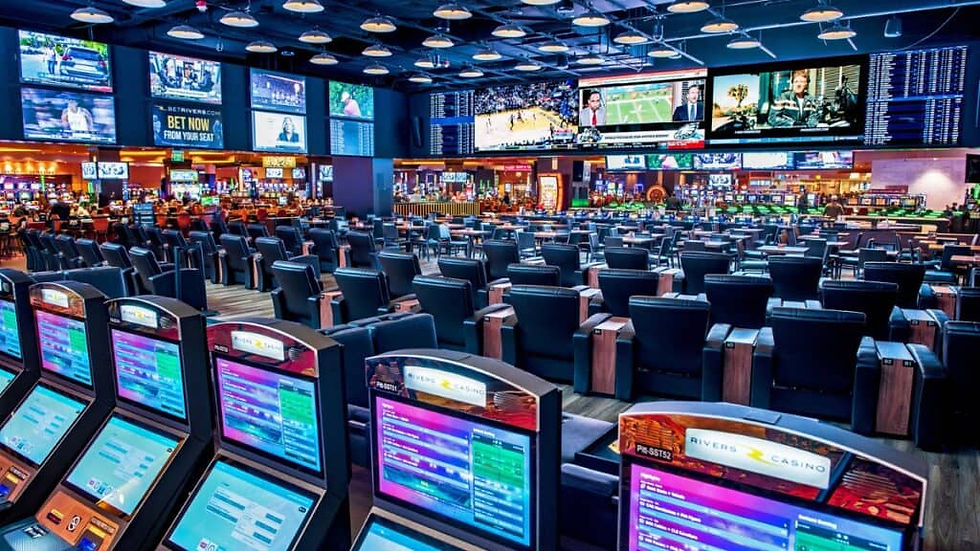
Cover image: A room designed for repetition, perfected long before the phone learned the gesture.
Comments