

TECHTONICS
THE DARK WEB IS NOT DARK, IT IS JUST NOT ILLUMINATED
MIHANIA DRĂGHICI
February 24, 2026
The dark web is usually described as the internet’s underworld, a hidden zone of crime and extremism. Few who speak about it have actually entered it. In an age that equates transparency with virtue, anonymity appears threatening by default. This essay approaches the dark web not as scandal but as structure, asking whether it is less a deviation from the network than the shadow cast by a culture that demands constant visibility.
I had heard about the dark web for years before I ever tried to enter it. It was always described in tones that mixed warning with fascination. It was where weapons were bought, where identities were sold, where extremist groups gathered, where the worst impulses of humanity were given infrastructure. The phrase circulated as shorthand for moral collapse. No one I knew had actually visited it, yet everyone seemed so certain about what it was. At some point, it all began to irritate me. It felt intellectually unserious to invoke a place one had never seen. If one is going to speak about darkness, one should at least confirm what the light conditions are there. So, I decided to look.
Accessing it required downloading Tor, the anonymity network originally developed with support from US Naval Research Laboratory researchers and later maintained by a global nonprofit community. Tor routes internet traffic through multiple encrypted relays scattered around the world. Each relay knows only the previous and the next step in the chain. The result is that the origin and destination are obscured. It is not magic. It is mathematics and distribution. The browser opened. The interface was sparse, almost dated. No cinematic distortion. No dramatic portal. Just a search bar and a set of security settings. The dark web is not dark. It is encrypted.

Because nothing says discreet online shopping like adding a handgun to your cart next to “50 rounds, optional.” Prime shipping not included.
The first sensation was not fear but banality. Pages loaded slowly. Many links were broken. Some pages appeared abandoned years ago. The aesthetic resembled the early internet, when design was secondary to function, and function was secondary to access.
There are marketplaces, certainly. The most famous, Silk Road, was shut down in 2013 by the US Federal Bureau of Investigation. Its founder was arrested and sentenced to life in prison. But successors emerged quickly. These markets resemble conventional e-commerce platforms. Products are categorized. Vendors receive ratings. Transactions are conducted in cryptocurrency. The goods range from drugs and counterfeit passports to stolen credit card numbers and malicious software kits. There are forums devoted to political extremism. There are encrypted communication channels used by activists in authoritarian states. There are whistleblowing platforms that mirror secure drop boxes. There are privacy-focused email services. There are digital libraries of banned books. There are conspiracy archives. There are scams and traps. There are stretches of emptiness. There are also journalists. Human rights organizations. Technologists testing privacy tools. Ordinary people who simply do not want their browsing behavior recorded and monetized. The dark web is not a single moral category. It is an alternative protocol. It is infrastructure that reduces traceability. The more interesting question is not what crimes occur there. Crime follows exchange wherever exchange exists. The more interesting question is why this architecture emerged at all.
The internet most people inhabit is structured around visibility. Search engines crawl it, index it, rank it. Platforms optimize for discoverability. Profiles are authenticated. Behavior is logged. Attention is measured. Identity is tied to metrics. Transparency has become a moral reflex. Governments must be transparent. Corporations must be transparent. Institutions must be transparent. Increasingly, individuals must also be transparent, searchable, accountable, legible.

Welcome to the anonymous web: same layout, no cookies, more paranoia.
The philosopher Byung-Chul Han, born in Seoul in 1959 and based in Germany, has argued that contemporary society disciplines primarily through exposure, not prohibition, as before. In what he calls the transparency society, power does not silence. It compels revelation. Everything must be communicable. Everything must be accessible. Secrecy appears suspicious by default. For Han, this shift marks a transformation in how power operates. Older regimes controlled by restricting speech, by forbidding publication, by drawing clear lines around what could not be said. Contemporary power, by contrast, encourages constant expression. We are invited to share, to comment, to react, to disclose. The subject participates willingly in its own exposure. Surveillance becomes participatory. The individual does not feel repressed, but connected. Transparency presents itself as moral progress. Corruption is exposed. Hidden structures are revealed. Yet Han suggests that the compulsion to make everything visible erodes the very possibility of interiority. When all experience must be articulated and circulated, nothing remains unspoken. Silence becomes deviant. Withdrawal becomes antisocial. In such a society, opacity is recoded as threat. If something cannot be accessed, it must be hiding wrongdoing. If a person refuses to disclose, suspicion follows. The presumption shifts from privacy as a right to transparency as an obligation.

Choose your bridge wisely—some lead to freedom, others to tech support forums at 3 a.m.
Under these conditions, anonymity no longer appears neutral. It appears antagonistic. The dark web, in this framework, is not merely a technical workaround. It is a structural refusal of a cultural command. It does not simply conceal activity. It interrupts the expectation that every action must be visible, archived, and retrievable. Under such conditions, invisibility itself becomes deviance. The surface web embodies this demand. To participate is to produce data. To click is to leave a trace. To scroll is to generate information about preference and hesitation. The system thrives on legibility.
The US legal scholar Shoshana Zuboff, born in 1951, describes this order as surveillance capitalism. In her analysis, human experience is translated into behavioral data, which is then analyzed and sold in predictive markets. Visibility is not only cultural but economic. The network extracts. For Zuboff, this transformation marks a new phase of capitalism. Earlier industrial systems extracted labor and natural resources. Surveillance capitalism extracts behavior. What we search, where we move, how long we pause over an image, what we hesitate to click, whom we message, even the rhythm of our typing becomes raw material. These traces are aggregated, modeled, and converted into predictions about what we will do next. Those predictions are then sold to advertisers, insurers, political campaigns, and other actors interested in influencing future behavior. The crucial point is that this extraction often occurs without meaningful consent. Participation in digital life produces data by default. One does not need to intend disclosure. Simply existing online generates surplus behavioral information. Visibility becomes infrastructural. It is built into the architecture of the system. Under surveillance capitalism, anonymity is economically disruptive. If the system depends on reliable identification and behavioral continuity, then encrypted routing and obscured metadata interrupt the flow of profitable data. The dark web does not simply conceal transactions. It interferes with the business model that equates legibility with value.
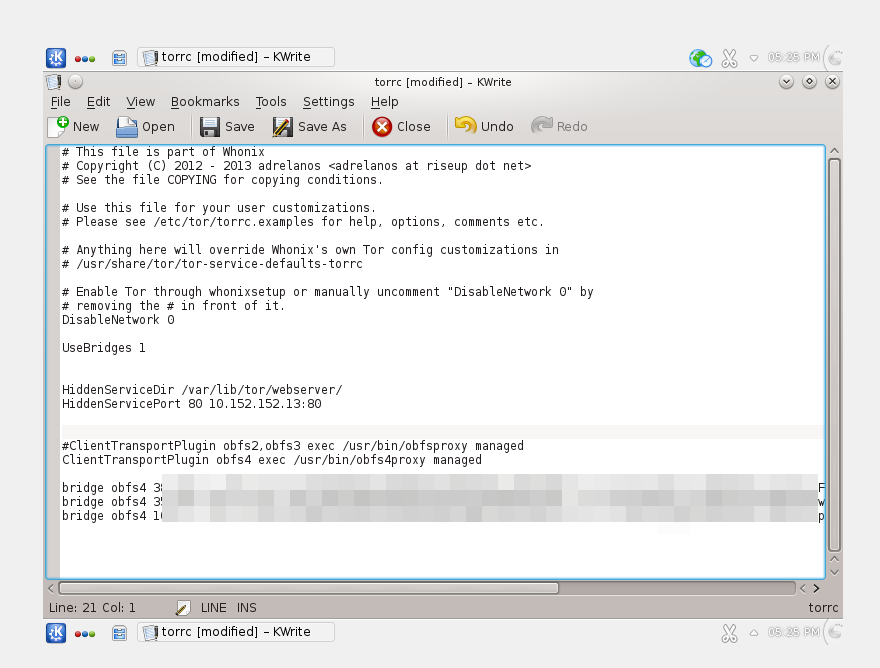
A minimalist poem about secrecy, written in configuration syntax.
Browsing the dark web felt strangely inefficient. No personalized advertisements appeared. No recommended content adjusted itself to my habits. No algorithm seemed to be smoothing the path ahead of me. The absence of friction that characterizes the surface web was gone. Navigation required effort. I was not being profiled, at least not in the familiar way. The experience was not optimized for retention. It was not trying to anticipate me. In a system built on extraction, inefficiency can appear almost radical.
The Italian philosopher Giorgio Agamben, born in Rome in 1942, has written extensively about the state of exception—spaces in which the law is suspended in order to preserve itself. Modern political systems, he argues, increasingly generate zones where legal norms are blurred or weakened. The dark web resembles a voluntarily constructed exception. It is not outside the law, given that law enforcement agencies operate within it and make arrests. Yet identification is more difficult. Jurisdiction becomes complicated. Sovereignty encounters friction. In Agamben’s account, the exception is never entirely external to the legal order. It is produced by it, maintained by it, and folded back into it. The dark web functions in a similar way. It does not abolish the law but stretches its reach and exposes its limits. When identity cannot be easily fixed to a body in a territory, the traditional link between subject and sovereign weakens. What appears as darkness is often simply the law struggling to see. This is not a lawless territory. It is a zone where the mechanisms of enforcement are unstable.

When “farm to table” takes a turn no one asked for.
The French theorist Paul Virilio (1932–2018) argued that every technological invention produces its own accident. The invention of the train led to the derailment. The invention of the airplane invented the plane crash. The accident is internal to the system; it is not an external anomaly. By this logic, the invention of total digital visibility invents the space of disappearance. If connectivity becomes universal, evasion becomes inevitable. If tracking becomes comprehensive, someone will design systems to evade tracking. The dark web is less a moral aberration than the structural accident of a network optimized for traceability. Its existence is predictable.
Martinican philosopher Édouard Glissant (1928–2011) proposed what he called the right to opacity. For Glissant, the demand to be fully understood, fully legible, and fully transparent is historically linked to domination. Colonial systems demanded that subjects render themselves knowable and classifiable. To be catalogued was to be controlled. To be interpreted without remainder was to be reduced. Glissant resisted this logic. He argued that relation between cultures does not require total comprehension. One does not have to penetrate the other fully in order to coexist. The insistence on clarity, on explanation, on translation into familiar categories, can become a subtle form of violence. It presumes that what cannot be decoded is illegitimate. Opacity, in his formulation, is not secrecy in the conspiratorial sense. It is the right to complexity. The right not to be simplified. The right to remain partially unintelligible to power. In a world that increasingly equates transparency with virtue, this defense of opacity acquires renewed urgency. The dark web, whatever else it may be, enacts technologically what Glissant articulated philosophically: the refusal to be entirely exposed. Opacity is not secrecy for its own sake. It is the refusal to be reduced to data points or stereotypes.

Entrepreneurship, but make it dystopian.
The dark web can be read as a technological expression of that refusal. It is a space where identity does not automatically precede speech. Where the user is not immediately mapped to a demographic profile. Where participation does not necessarily produce a permanent, easily searchable archive. This does not absolve it of harm. The same architecture that protects dissidents protects fraud networks. The same encryption that shields investigative journalists shields traffickers. Opacity protects both whistleblowers and predators. The infrastructure does not discriminate.
The artist, filmmaker, and theorist Hito Steyerl, born in 1966 in Munich, has written about the paradox of digital visibility. We are constantly imagined and circulated, yet this hypervisibility does not necessarily grant political power. To be seen is not to be sovereign. In such a landscape, disappearance can become a gesture.
On the dark web, there are no follower counts. No verified badges. No obvious metrics of influence. One does not accumulate visible social capital in the same way. The absence of quantification alters the atmosphere. It feels less performative. What unsettled me most was not encountering explicit criminality. It was recognizing how easily one could normalize anonymity. After a few hours, the lack of tracking felt almost natural. The surface web, with its constant nudging and profiling, began to seem intrusive by comparison. If society were to eliminate anonymity entirely and require verified identity for every online interaction, certain forms of crime would undoubtedly diminish. But so would certain forms of dissent. Whistleblowers would hesitate. Journalistic sources would disappear. Political opposition in authoritarian regimes would be exposed. Total transparency would produce a safer surface. It would also produce a population that cannot withdraw.

E-commerce, if your customer reviews were entered as evidence in federal court.
The dark web is not dark because it is purely evil. It is dark because it refuses illumination. In a culture that equates visibility with virtue, refusal appears sinister. But the dark web is not at all an aberration. It is a structural counterpart to a networked society that treats opacity as guilt. The more comprehensive the demand to be seen, the more sophisticated the tools of disappearance will have to become.
The surface web and the dark web are not opposites. They are co-produced. One expands traceability. The other refines evasion. Each intensifies the other.

The world’s worst rebranding effort, now available from ISIS in multiple languages.
I closed the Tor browser without drama. Nothing catastrophic had occurred. The experience was quieter than the mythology suggested. Yet something had shifted. The darkness was not there, where I had been looking. The darkness was the assumption that everything should be visible.
Mihania Drăghici is a Romanian essayist and lecturer in political theory at Central European University in Vienna, where she teaches courses on sovereignty to students who prefer platforms without it. Born in Bucharest in 1987, she investigates digital opacity, encrypted infrastructures, and the moral optimism of surveillance capitalism, usually from a laptop that refuses to update.
Cover image: The digital equivalent of hiding your house key under the doormat—but in hexadecimal.
Comments